When I first heard about Chesta Bala in astrology, I was sitting with my grandfather looking at my birth chart, and he pointed at a retrograde planet saying, “Yeh planet apni asli taqat dikhayega.” That moment stayed with me. Chesta Bala, or motional strength, is one of the 6 components of Shadbala in Vedic Astrology that measures how powerfully a graha delivers its results based on its speed and direction in the sky. Unlike other strengths, this one is alive — it changes with planetary motion. A planet with high Chesta Bala can shake your entire life, while a weak one quietly fades into the background. Let me break down this fascinating concept in a simple way.
1. What is Chesta Bala in Astrology?
Chesta Bala literally translates to “effort strength” or “dynamic strength.” It measures how active a planet is based on its apparent motion as seen from Earth. Think of it like this — when a planet is retrograde or moving close to Earth, it works harder, and its results hit deeper in your life. When it’s far away or moving too fast, it barely makes an impact.
In simple words, Chesta Bala is the planet’s struggle to deliver results. The higher the effort, the stronger the outcome.
Meaning and Sanskrit Origin of “Chesta”
The word Chesta (चेष्टा) comes from Sanskrit, meaning “effort,” “movement,” or “striving.” Ancient Indian sages observed that planets don’t move uniformly — sometimes they speed up, sometimes they slow down, and occasionally they appear to move backward. This apparent motion is what Chesta captures. It’s not just astronomy — it’s the soul of a planet trying to express itself through movement.
Chesta Bala as Part of Shadbala (Six-Fold Strength)
Shadbala means “six fold strength” — a complete system in Vedic Astrology to measure how strong a planet truly is. Chesta Bala is one of these 6 parts, alongside:
| Type of Bala | Meaning |
|---|---|
| Sthana Bala | Positional strength |
| Dig Bala | Directional strength |
| Kala Bala | Temporal strength |
| Drik Bala | Aspectual strength |
| Naisargika Bala | Natural strength |
| Chesta Bala | Motional strength |
Without all six working together, a planet’s true power cannot be judged. Chesta Bala is unique because it’s the only one that depends purely on the planet’s relationship with the Sun and its arc of retrogression.
2. Why is Chesta Bala Important in a Horoscope?
Honestly, when I started reading charts, I used to ignore Chesta Bala completely. Big mistake. A planet may be sitting in its own sign with high Sthana Bala, but if its motional strength is weak, it just won’t deliver. I’ve seen charts where a retrograde Saturn with maximum 60 Virupas completely flipped a person’s career, even though Saturn was placed in a “bad” house.
This is why Chesta Bala matters — it tells you whether a planet has the energy to actually do something in your life or not.
Role in Predictive Astrology
In predictive astrology, Chesta Bala is the secret ingredient. A planet with high Chesta Bala dominates the horoscope. It influences:
- The intensity of planetary results during its phase
- Sudden major life events during transits
- Whether benefic or malefic outcomes will manifest strongly
- The depth of karmic patterns triggered in the native’s life
A weak Chesta Bala in astrology means the planet is sleeping. A strong one means it’s wide awake and acting.
Connection with Planetary Results and Dasha
This is where it gets practical. When a planet runs its Dasha period (especially in Vimshottari Dasha), its Chesta Bala decides how loud or quiet that period will be.
For example, if your Jupiter Dasha is running and Jupiter is retrograde with high Chesta Bala, expect strong financial growth, wisdom, and spiritual expansion. But if Jupiter is Atichara (moving too fast) with low Chesta Bala, results will feel scattered and unstable.
The same logic applies in Gochara (transits). A transiting planet with high Chesta Bala can trigger sudden reversals or impactful outcomes — sometimes overnight.
3. The 8 States of Planetary Motion (As per BPHS)
Now we get to the real meat. Maharishi Parashara in Brihat Parashara Hora Shastra (BPHS), under Slokas 21-23, describes 8 distinct states of planetary motion. Each state carries a different Virupa value (out of a maximum of 60 Shashtiamsas). I remember spending nights trying to memorize this table — and once you do, your chart reading changes forever. Learn more about the foundational text behind these calculations in the Brihat Parashara Hora Shastra overview.
Vakra (Retrograde) — Maximum Strength
Vakra means backward motion. When a planet appears to move in the opposite direction (which happens when outer grahas like Mars, Jupiter, and Saturn are at 180 degrees opposition to the Sun), it gets the maximum Chesta Bala of 60 Virupas. Retrograde planets become karmically loaded — they often deliver unexpected results, dig up past situations, and force you to revisit unfinished business.
Anuvakra (Re-Retrograde)
Anuvakra is when a planet enters the previous Rashi while still in retrograde motion. It carries 30 Virupas. The planet is still powerful but in a re-tracing mode — like reviewing old chapters of life.
Vikala (Stationary)
When a planet appears almost still in the sky, it’s called Vikala — stationary. It holds 15 Virupas. The energy is concentrated, intense, and focused on one point in your chart. I’ve noticed stationary planets often mark turning points in major life decisions.
Manda (Slow Motion)
Manda means slow motion. The planet is moving slower than its average speed, giving 30 Virupas. Results come gradually but steadily — nothing dramatic, but reliable.
Mandatara (Slower than Manda)
Even slower than Manda. Mandatara gives 15 Virupas. The planet is almost dragging itself. Effects feel delayed but heavy when they arrive.
Sama (Even-Paced Motion)
Sama is normal, balanced motion — neither too fast nor too slow. It carries 7.5 Virupas. This is the planet’s “neutral gear.” Average results, nothing extreme.
Chara (Fast Motion)
Chara means fast motion, giving 45 Virupas. Interestingly, a fast planet still has decent strength because it’s actively working — just not as karmically deep as retrograde.
Atichara (Accelerated Motion)
Atichara is the planet entering the next sign in accelerated motion, carrying 30 Virupas. It often brings scattered, unstable, or erratic results — like a person rushing through tasks without focus.
📊 Comparison Table of the 8 States of Planetary Motion
| State of Motion | Sanskrit Name | Meaning | Virupas (Strength) |
|---|---|---|---|
| Retrograde | Vakra | Moving backward | 60 |
| Re-Retrograde | Anuvakra | Entering previous sign in retrograde | 30 |
| Stationary | Vikala | Devoid of motion | 15 |
| Slow Motion | Manda | Slower than usual | 30 |
| Slower than Manda | Mandatara | Extremely slow | 15 |
| Even-Paced | Sama | Normal speed | 7.5 |
| Fast Motion | Chara | Faster than average | 45 |
| Accelerated | Atichara | Entering next sign quickly | 30 |
One thing I always tell my students — don’t just memorize these numbers. Observe them in real charts. The day you see a retrograde Mars with 60 Virupas trigger a sudden career shift in someone’s life, this whole table will come alive for you.
4. Which Planets Get Chesta Bala?
Here’s something most beginners get wrong — they assume all 9 planets get Chesta Bala. They don’t. Only those grahas that can change their speed and direction in the sky qualify for this strength. The rest follow different rules. Let me clear this up once and for all.
The Five True Grahas (Mars, Mercury, Jupiter, Venus, Saturn)
The 5 true grahas that fully participate in Chesta Bala calculations are Mars (Kuja), Mercury, Jupiter, Venus, and Saturn. Why these 5 planets? Because they’re the only ones that can become Vakra (retrograde) when observed from Earth.
When these outer grahas move toward 180 degrees opposition with the Sun, their arc of retrogression increases, and so does their motional strength. I always remind my students — these 5 planets are the real game-changers in any chart’s Shadbala assessment.
Sun and Moon — The Special Case
The Sun and Moon never go retrograde. They always move in a forward direction at a fairly steady mean longitude pace. So how do we calculate their Chesta Bala?
According to BPHS and BV Raman’s explanation in Graha and Bhava Balas, the Sun’s Chesta Bala is equal to its Ayana Bala (a part of Kala Bala), and the Moon’s Chesta Bala is taken as its Paksha Bala. In simple terms, the luminaries borrow their motional strength from other components — a clever workaround the ancient sages designed.
Rahu and Ketu — Do Shadow Planets Have Chesta Bala?
Rahu and Ketu are not physical planets — they’re mathematical points (lunar nodes) that always move in retrograde motion. Since classical Vedic Astrology texts like BPHS focus on the 7 visible grahas, Rahu and Ketu are generally excluded from Chesta Bala calculations.
However, some modern astrologers argue that because they’re always retrograde, they should be assigned a default 60 Virupas. My personal take? Stick to the classical method. Rahu and Ketu influence the chart through different mechanisms — house placement, nakshatra, and dasha patterns matter more for them than motional strength.
🔮 Want to See Your Own Planetary Strength?
Understanding Chesta Bala in astrology is powerful, but seeing it work in your own chart is a game-changer. Before you go deeper, take a moment to explore your planetary positions and karmic connections with these free tools:
👉 Free Birth Chart Calculator — Generate your complete D1 chart in seconds and check planetary placements.
👉 Free Synastry Chart Calculator — Compare two charts side by side to see karmic and emotional bonds.
👉 Free Love Calculator — Discover your romantic compatibility based on Vedic astrology principles.
Try these tools, then come back and apply what you’ve just learned about motional strength to your own planets. 🌟

5. How to Calculate Chesta Bala — Step-by-Step Formula
I’ll be honest — the first time I tried calculating Chesta Bala manually, it took me 2 hours and I still got it wrong. The math isn’t difficult, but it requires precision.
The BPHS Formula (Slokas 24-25)
In Brihat Parashara Hora Shastra, Slokas 24-25 under motional strength give us this formula:
Add the True Longitude and Mean Longitude of the graha, then divide by 2 to get the average. Subtract this average from the Seeghrochcha (Apogee point) of that planet.
If the result is less than 180 degrees, divide it by 3. If the result is more than 180 degrees, subtract it from 360, then divide by 3.
The final answer is your Chesta Bala in Virupas.
Understanding Chesta Kendra
Chesta Kendra is the heart of this calculation. It’s the angular difference between the planet’s Seeghrochcha and its average longitude.
Formula: Chesta Kendra = Seeghrochcha − [(Mean Longitude + True Longitude) ÷ 2]
This single value tells you exactly how close the planet is to its retrogression point. The closer to 180 degrees, the higher the Chesta Bala.
Worked Example (Simplified BV Raman Method)
Let me use the same example from BV Raman’s book for clarity:
- Mean Longitude of Kuja (Mars) = 266.34 degrees
- True Longitude of Kuja = 229.50 degrees
- Average = (266.34 + 229.50) ÷ 2 = 247.92 degrees
- Seeghrochcha (from Sun’s mean longitude) = 181.23 degrees
- Chesta Kendra = 181.23 − 247.92 = −66.69, which adjusts to 293.31 degrees
Since 293.31 > 180, subtract from 360: 360 − 293.31 = 66.69 degrees
Now divide by 3: Chesta Bala = 66.69 ÷ 3 = 22.23 Virupas
That’s it. Mars in this chart carries 22.23 Virupas of motional strength — moderate, not weak, not super powerful.
Maximum Value: 60 Virupas/Shashtiamsas
The maximum any planet can score is 60 Virupas (also called Shashtiamsas or Shastiamsas — they’re the same thing, just spelled differently across texts). This maximum 60 is achieved only when a planet is in full Vakra (retrograde) state at exact 180 degrees opposition to the Sun. That’s why retrograde planets are considered the most karmically loaded — they sit at the peak of their dynamic strength.
Software Tools for Easy Calculation
Look, doing this by hand is great for learning, but in real practice I use software. Here are the tools that calculate Chesta Bala accurately:
- Jagannatha Hora (free, my personal favorite)
- Parashara’s Light (professional grade)
- Kala Vedic Astrology Software
- AstroSage Kundli (basic but reliable)
These tools handle the mean longitude, true longitude, and Seeghrochcha calculations in seconds. But I still recommend doing 2-3 charts manually first — you’ll understand the why behind the numbers.
6. Effects of High vs Low Chesta Bala on Each Planet
This is where theory meets real life. After analyzing hundreds of charts, I can tell you — a planet’s Chesta Bala changes how its results show up in a person’s life. Same planet, same house, but different motional strength = completely different outcomes.
Sun — Leadership and Confidence
A Sun with high Chesta Bala produces natural leaders — confident, ambitious, and respected. Think CEOs, government officials, decision-makers. Low Chesta Bala Sun? The native struggles with self-worth, lacks initiative, and often feels invisible in groups. I once read a chart where a low-strength Sun made an otherwise brilliant person settle for backseat roles their entire career.
Moon — Mental Stability and Intuition
The Moon governs the mind. With high Chesta Bala, you get emotional balance, sharp intuition, and strong mental stability. With low Chesta Bala, expect mood swings, anxiety, stress, and confusion in decision-making. The Moon’s Paksha Bala plays heavily into this — a waxing Moon near full phase usually scores well.
Mars — Courage and Energy
A retrograde Mars with 60 Virupas is fire personified — fearless, action-oriented, athletic, and unstoppable. I’ve seen it in charts of soldiers, surgeons, and entrepreneurs. Low Chesta Bala Mars? The person lacks stamina, hesitates in conflict, and often gives up too early. For deeper Mars dynamics, read about the Mars Pluto opposition and how power struggles unfold when Mars is loaded.
Mercury — Intellect and Communication
High Chesta Bala Mercury delivers sharp intellect, witty communication, and quick decision-making. Writers, traders, lawyers — they often have a strong Mercury. But when Mercury is Atichara (too fast) with low Chesta Bala, decision making becomes erratic, business choices go wrong, and the person sounds confused even when they’re right.
Jupiter — Wisdom and Wealth
A retrograde Jupiter with high Chesta Bala is one of the most powerful placements in Vedic Astrology. Strong wisdom, financial growth, spiritual depth, and life-changing teachers come into play. Low Chesta Bala Jupiter? The native struggles with finances, lacks proper guidance, and faces delays in higher education or spiritual progress.
Venus — Love and Creativity
Venus with high Chesta Bala brings beauty, love, artistic talent, and harmonious relationships. Designers, musicians, performers thrive here. When Venus is combust or has low Chesta Bala (within 6 degrees of the Sun), expect relationship issues, lack of charm, and creative blocks. I’ve watched this play out in too many marriage compatibility readings.
Saturn — Discipline and Longevity
This is my favorite one. Saturn with high Chesta Bala in astrology — especially retrograde — creates legends. Deep discipline, patience, long-term success, and longevity. Slow start in life, but unstoppable later. Low Chesta Bala Saturn brings endless delays, lack of perseverance, and karmic obstacles that never seem to lift.
📊 Summary Comparison Table — High vs Low Chesta Bala Effects
| Planet | High Chesta Bala Effects | Low Chesta Bala Effects |
|---|---|---|
| Sun | Strong leadership, high confidence, respect | Weak self-image, lack of ambition |
| Moon | Mental stability, sharp intuition | Mood swings, anxiety, confusion |
| Mars | High courage, energy, stamina | Hesitation, low motivation, weak drive |
| Mercury | Sharp intellect, clear communication | Poor concentration, indecisiveness |
| Jupiter | Wisdom, financial growth, spirituality | Money struggles, weak guidance |
| Venus | Strong relationships, creativity, charm | Love issues, low charisma, creative blocks |
| Saturn | Discipline, patience, long-term success | Endless delays, perseverance issues |
A small tip from my own experience — never judge a planet only by its sign or house. Always check its Chesta Bala first. It’s like checking the battery before judging the phone.
7. Chesta Bala and Retrograde Planets — A Powerful Connection
If there’s one thing I’ve learned from reading charts for years, it’s this — retrograde planets are not weak, they’re loaded. The whole concept of Chesta Bala in astrology revolves around this single truth. Let me explain why this connection is so deep.
Why Retrograde = Maximum Chesta Bala
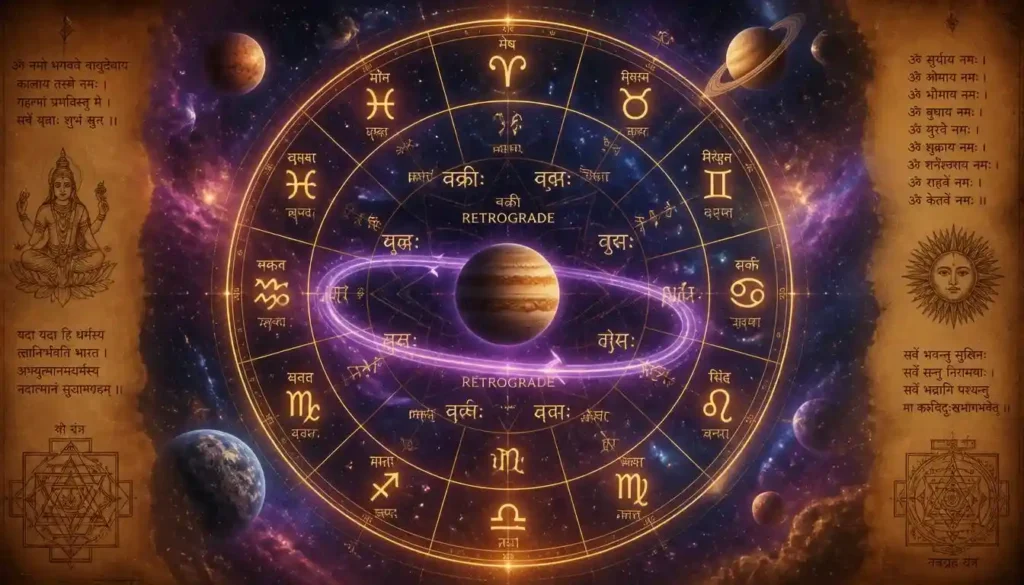
When an outer graha like Mars, Jupiter, or Saturn moves to 180 degrees opposition with the Sun, it appears to move backward from Earth. This is Vakra (retrograde motion). At this exact point, the planet is closest to Earth, and its arc of retrogression is at maximum.
The BPHS assigns 60 Virupas — the highest possible Chesta Bala in astrology — to a fully retrograde planet. Why? Because at this stage, the planet is putting in the most effort to deliver results. It’s no longer just passing through — it’s actively re-engaging with karmic themes in your life.
Karmic Significance of Retrograde Planets
A retrograde planet in a birth chart is like an unfinished story from a past life. The soul came back to complete what was left undone. I’ve personally seen this in dozens of charts — natives with strong retrograde planets often feel a strange pull toward certain professions, relationships, or spiritual paths they can’t explain logically.
These planets:
- Carry unfinished karma from previous lifetimes
- Bring unconventional results that don’t fit textbook predictions
- Create inner conflict but often lead to external success
- Force introspection and deep transformation
- Trigger major life events during their Dasha or transit
Examples: Retrograde Saturn, Jupiter, Mercury
Let me share what I’ve actually observed:
Retrograde Saturn — Deep karmic lessons, delays with purpose. The person struggles in the beginning, but those struggles silently shape a strong base that holds them up for decades to come. I’ve seen this in charts of self-made entrepreneurs who struggled for 10-15 years before becoming unstoppable.
Retrograde Jupiter — Unconventional wisdom, spiritual growth, and surprising financial reversals. These natives often become teachers, healers, or finance experts who think outside the system.
Retrograde Mercury — Sharp but unusual intellect. Brilliant in research, editing, and behind-the-scenes work. They communicate in their own way — sometimes misunderstood, but always original.
Saturn’s pressure shows up even more intensely in relationships — see how it plays out in a Mars square Saturn composite chart.
8. Chesta Bala in Predictive Astrology
This is where Chesta Bala stops being theory and becomes a real prediction tool. After years of practice, I can tell you — astrologers who ignore Chesta Bala in their analysis are missing 30-40% of the picture.
In Birth Chart (D1) Analysis
In the D1 (Birth Chart), Chesta Bala tells you how strongly each planet will manifest its planetary results throughout the native’s life. A planet with high motional strength dominates the chart, regardless of its house or sign placement.
For example, even a debilitated planet can deliver decent results if its Chesta Bala in astrology is high. Conversely, an exalted planet with low Chesta Bala may sit silently in the chart, never reaching its full potential. This is why I always check Shadbala scores before making any major prediction.
In Dasha Periods (Vimshottari)
The real power of Chesta Bala shows up during Vimshottari Dasha. When a planet’s Dasha period begins:
- High Chesta Bala → Results become dominant and unavoidable. Life themes related to that planet take center stage.
- Low Chesta Bala → Effects feel weak, scattered, or delayed.
I once predicted a major career shift for a client during her Saturn Mahadasha because her Saturn had 48 Virupas of Chesta Bala. She got promoted to a director-level role within 6 months of the dasha starting.
In Transits (Gochara) and Major Life Events
During transits (Gochara), a planet with high Chesta Bala can trigger:
- Sudden reversals in career or relationships
- Re-visiting of past situations and unresolved issues
- Delayed but impactful outcomes that change life direction
- Activation of karmic patterns related to that planet
This is especially true for retrograde transits. When Saturn, Jupiter, or Mars goes retrograde during their transit through key houses, the events triggered are usually karmically significant — not random.
9. Remedies to Strengthen a Planet with Low Chesta Bala in Astrology
Here’s the part most people skip. If a planet has weak Chesta Bala in your chart, you’re not stuck with it forever. Ancient sages designed specific remedies to boost a planet’s strength. I’ve personally recommended these to clients with measurable improvements over 6-12 months.
Mantras for Each Planet
Daily mantra chanting is the simplest and most effective remedy. Recite 108 times daily for 40 days minimum:
| Planet | Mantra |
|---|---|
| Sun | Om Suryaya Namah |
| Moon | Om Chandraya Namah |
| Mars | Om Mangalaya Namah |
| Mercury | Om Budhaya Namah |
| Jupiter | Om Gurave Namah |
| Venus | Om Shukraya Namah |
| Saturn | Om Shanicharaya Namah |
Gemstone Recommendations
Gemstones directly channel planetary energy into the body. Always consult an astrologer before wearing one — wrong stones can cause damage.
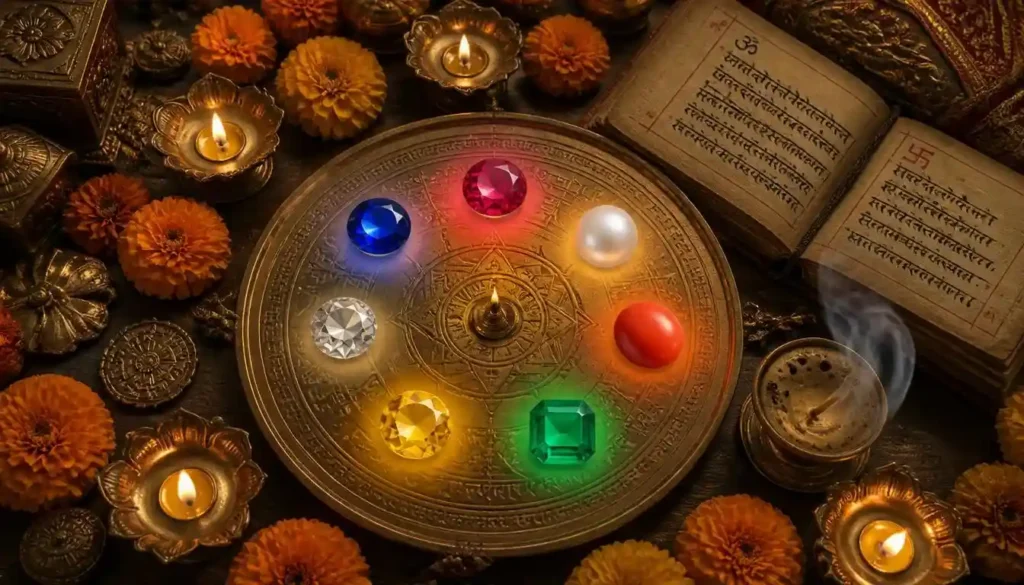
- Sun → Ruby (Manik)
- Moon → Pearl (Moti)
- Mars → Red Coral (Moonga)
- Mercury → Emerald (Panna)
- Jupiter → Yellow Sapphire (Pukhraj)
- Venus → Diamond or White Sapphire
- Saturn → Blue Sapphire (Neelam)
A weak Saturn benefits massively from a properly tested Neelam worn on Saturday during Saturn’s hora.
Charity, Donations, and Yantras
Charity is the most underrated remedy. Donate items related to the weak planet on its specific day:
- Saturday → Black sesame, mustard oil, iron items for Saturn
- Tuesday → Red lentils, jaggery for Mars
- Thursday → Yellow items, books, turmeric for Jupiter
- Friday → White clothes, sugar, dairy for Venus
Yantras (sacred geometric diagrams) and planet-specific pujas during favorable muhurta also work powerfully. Consistency matters more than complexity — daily small actions beat occasional grand rituals.
10. Why Every Astrologer Must Master Chesta Bala
Mastering Chesta Bala in astrology is what separates a textbook astrologer from a real practitioner. Anyone can read planetary positions, but understanding how strongly a planet acts — that’s the art. Chesta Bala gives you the answer to the most important question in any chart reading: Will this planet actually deliver?
I’ve spent years watching predictions fail because the astrologer ignored motional strength. A planet’s house, sign, and aspects mean very little if it doesn’t have the effort to manifest. Once you start applying Chesta Bala in your readings, your accuracy jumps dramatically. You’ll catch karmic patterns others miss, time events better through Dasha and transits, and offer remedies that genuinely work.
If you’re serious about Vedic Astrology, treat Chesta Bala in astrology as a daily practice — not an advanced topic. Calculate it. Observe it. Live with it. Your charts will start speaking to you in a way they never did before.
✨ Take Your Astrology Journey to the Next Level
Now that you understand how Chesta Bala in astrology shapes a planet’s true power, why stop here? The deeper you go into your chart, the more clarity you’ll gain about your life path, personality, and emotional patterns.
👉 Free Big Three Calculator — Find out your Sun, Moon, and Rising Sign in one click — the foundation of your entire personality.
👉 Free Moon Sign Calculator — Uncover your emotional core, intuition, and mental stability through your Moon sign.
Knowing your Big Three and Moon sign alongside Chesta Bala gives you a complete picture of how your planets think, feel, and act. Start exploring today — your chart has so much more to say. 🌙
11. Frequently Asked Questions (FAQs)
What is the maximum value of Chesta Bala?
The maximum Chesta Bala a planet can score is 60 Virupas (also called Shashtiamsas). This is achieved only when an outer graha is in full Vakra (retrograde motion) at exact 180 degrees opposition to the Sun.
Which planet has the highest Chesta Bala?
Any retrograde planet at perfect opposition with the Sun holds the highest Chesta Bala of 60 Virupas. Among the 5 true grahas, Saturn, Jupiter, and Mars most commonly reach this peak due to their slower orbits and longer retrograde phases.
Is retrograde always good for a planet?
In terms of Chesta Bala, yes — retrograde gives maximum motional strength. But results can be unconventional, intense, or karmically heavy. A retrograde planet isn’t always “good” in the traditional sense; it brings deeper, unexpected outcomes that require introspection.
Do Rahu and Ketu have Chesta Bala?
Classical BPHS does not assign Chesta Bala to Rahu and Ketu since they’re shadow planets, not physical grahas. Some modern astrologers give them a default 60 Virupas because they’re always retrograde, but traditional Vedic practice excludes them.
Can Chesta Bala be increased through remedies?
Chesta Bala itself is astronomical and fixed at birth. However, remedies like mantras, gemstones, charity, and yantras can strengthen the planet’s effect in your life, making low motional strength feel less restrictive over time.
What is the unit of Chesta Bala measurement?
Chesta Bala is measured in Virupas, also called Shashtiamsas or Shastiamsas. One Virupa equals 1/60th of a Rashi. The total ranges from 0 to 60, where 60 represents maximum motional strength.