When I first started learning traditional astrology, I kept hearing astrologers ask one strange question: were you born during the day or at night? It sounded too simple to matter. But this single fact splits every birth chart into two types — a day chart or a night chart (day chart vs night chart) — and it quietly changes how every planet behaves in your natal chart.
Quick Answer: A day chart means you were born with the Sun above the horizon line (the Sun sits in Houses 8-12). A night chart means you were born with the Sun below the horizon (the Sun sits in Houses 2-6). This is decided by sect — an ancient Hellenistic astrology rule that sorts the 7 traditional planets into a day team and a night team.
What Is Sect in Astrology?
Sect is one of the oldest ideas in traditional astrology, going back to Hellenistic Greece. The word comes from the Greek hairesis, meaning “faction” or “alliance.” In plain terms, sect decides the power structure of the chart — which planets are your friends and which ones make life harder.
For about two or three decades, sect was almost forgotten by modern astrology. It is making a strong comeback now, thanks to teachers like Chris Brennan and writers like Demetra George. I remember the moment sect clicked for me — suddenly my “difficult” Saturn made sense, and I understood why it had never felt as heavy as the books warned. For a deep dive into the history of sect, see Chris Brennan’s work on Hellenistic astrology.
Day Chart vs Night Chart — The Simple Difference
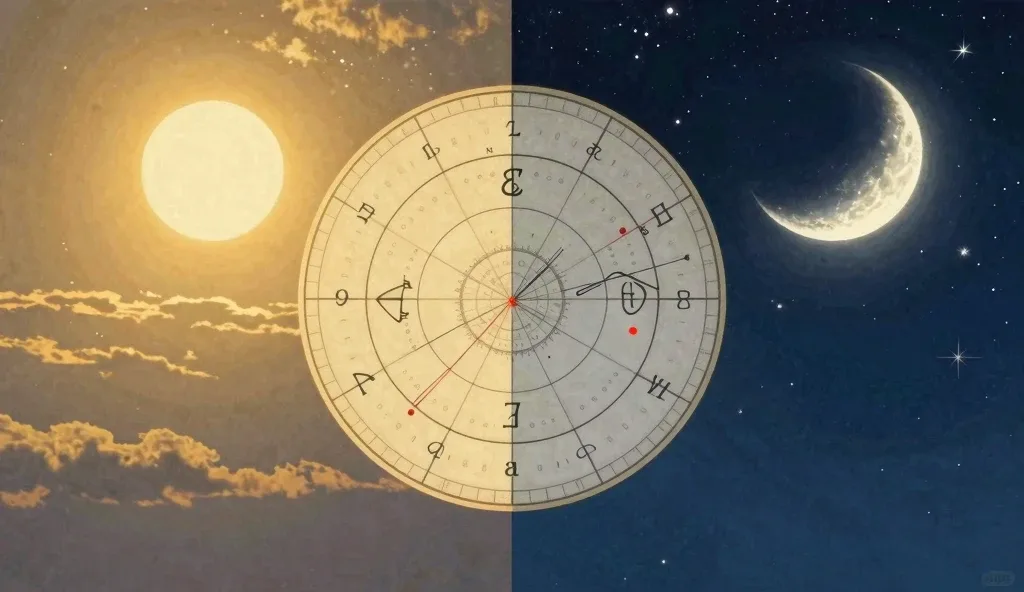
The difference between day chart vs night chart is just this: where was the Sun when you took your first breath?
If the Sun was above the horizon — meaning it was daylight outside — you have a day chart, also called a diurnal chart. If the Sun was below the horizon — meaning it was dark out — you have a night chart, also called a nocturnal chart.
That is the whole rule. It is not about your Sun sign. A Leo can have a night chart, and a Pisces can have a day chart. It only depends on the time of day you were born. One quick mini-cheat I always share: if you were born in the middle of the night, you almost certainly have a night chart; if you were born in clear daylight, it is a day chart.
Diurnal vs Nocturnal — Key Terms to Know
Before going further, here are the key words you will keep meeting. I wish someone had handed me this glossary of terms on day one.
- Diurnal — “of the day.” A diurnal chart is the same as a day chart.
- Nocturnal — “of the night.” A nocturnal chart is the same as a night chart.
- Luminaries — the Sun and Moon, the two main lights of the sky.
- Sect light — the luminary that rules your chart. In a day chart, the Sun is your sect light; in a night chart, the Moon is your sect light.
- Benefic — these are the helpful planets, Venus and Jupiter, known for making things feel lighter and smoother.
- Malefic — the “hard” planets that bring challenge: Mars and Saturn.
- Of the sect — when a planet shares the same side as your chart’s sect, we say it is “of the sect.”
- Out of sect — a planet on the opposite team, which feels more strained.
A useful picture: think of the two sects like two soccer teams. The of the sect planets are playing a home game — calm, supported, comfortable. The out of sect planets are the away team — they can still score, but everything takes more effort.

How to Tell If You Have a Day or Night Chart
To get going, just three details are required — the date you were born, the precise birth time, and the place of your birth. The most accurate birth time is the one on your birth certificate. If you do not know it, an astrologer can estimate it through a process called rectification — but for sect, even a rough idea of day or night usually works.
Step 1 — Pull Up Your Free Birth Chart
First, get a free birth chart. The tools I trust most are Astroclacpro.com. Time Passages is good too. When I started, I used Astro Calc Pro’ simple chart resource because it was clean and not overwhelming.
One important setting: choose whole sign houses as your house system. Sect comes from Hellenistic astrology, and whole sign houses is the system it was built for. If your chart uses another house system, your sect reading can come out wrong.
Step 2 — Find Your Horizon Line (Ascendant–Descendant)
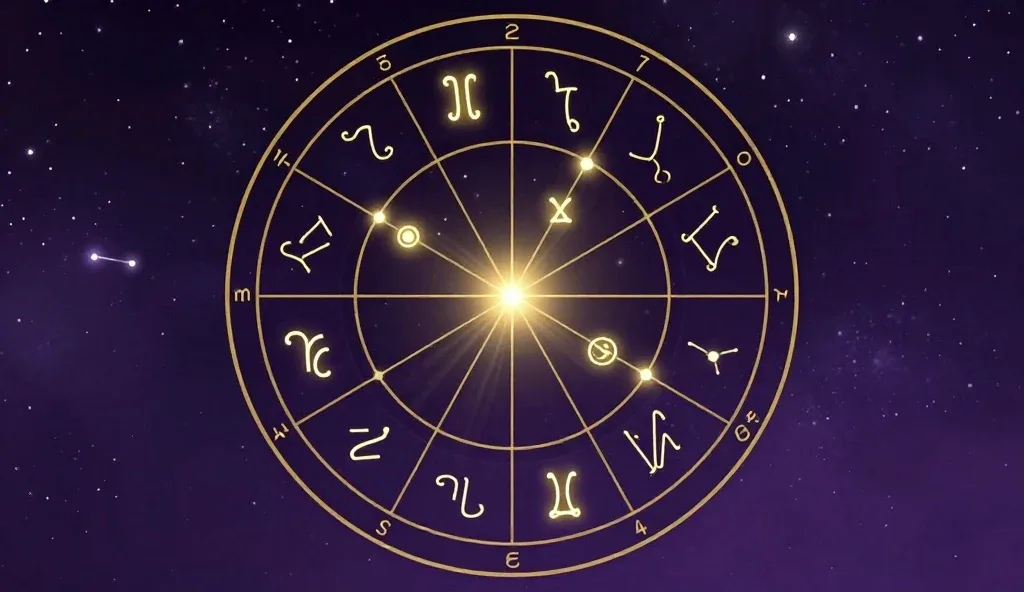
Now look at your natal chart and find the horizon line. Draw an imaginary line straight across from your Ascendant (the AC point, on the left, the eastern horizon) to your Descendant (the DC point, on the right, the western horizon).
This Ascendant–Descendant line splits the chart into a top half and a bottom half. The top half is the sky above the horizon; the bottom half is the sky below the horizon. Everything above that line was visible in the sky when you were born.
Step 3 — Locate the Sun: Above or Below the Horizon
Next, find the Sun — the small circle with a dot inside (☉). Ask one question: is the Sun above the horizon line or below the horizon line?
- If the Sun was sitting above the horizon, your chart is a day chart, the Sun lands in Houses 8-12, and that makes the Sun your sect light.
- Sun below the horizon → night chart (Sun in Houses 2-6) → the Moon is your sect light.
One common mistake: people assume Houses 7-12 always mean a day chart. That is not true. The Sun must truly be above the horizon line, not just sitting in a high-numbered house. If your Sun is in the 1st house or 7th house, you must check carefully whether it is just above or just below the line.
Born at Sunrise or Sunset? The Twilight Exception
If you were born near sunrise or sunset, you are a special case — and I have read enough of these charts to say it honestly: the rule blurs here. At dawn and dusk, day and night seem to melt into each other.
When the Sun sits right on the Ascendant or Descendant, your chart can act like a day chart even if it was technically still night, or the reverse. Many astrologers apply a small orb of about 3-5 degrees to the Sun in these moments. Honestly, the best test is your own life — read both descriptions and notice which one feels like you. A twilight birth often carries a bit of both teams.
Day Chart vs Night Chart: Side-by-Side Comparison
Here is the quick side-by-side view I keep coming back to when reading any natal chart:
| Factor | Day Chart (Diurnal) | Night Chart (Nocturnal) |
|---|---|---|
| Sun’s position | Above the horizon | Below the horizon |
| Sun’s houses | Houses 8-12 | Houses 2-6 |
| Sect light | Sun | Moon |
| You may identify more with | Sun sign | Moon sign |
| Benefic of the sect | Jupiter (stronger) | Venus (stronger) |
| Out of sect benefic | Venus | Jupiter |
| Malefic of the sect | Saturn (more constructive) | Mars (more constructive) |
| Out of sect malefic | Mars (harsher) | Saturn (harsher) |
| The “home team” | Diurnal sect — Sun, Jupiter, Saturn | Nocturnal sect — Moon, Venus, Mars |
| Mercury | Diurnal if it rises before the Sun | Nocturnal if it rises after the Sun |
The pattern is simple once you see it: the day planets work best in a day chart, and the night planets work best in a night chart. Jupiter is stronger in day charts, Venus is stronger in night charts, Saturn is harsher in night charts, and Mars is harsher in day charts.
The Day Team vs The Night Team (Sect Planets Explained)
Once you know your sect, the 7 traditional planets split into two clear teams. Sect decides who is “of the sect” and who is “out of sect” — and that single fact shifts how every planet shows up in your natal chart.
The 7 traditional planets are the ones the ancient astrologers could see with the naked eye: Moon, Mercury, Venus, Sun, Mars, Jupiter, and Saturn. The 3 modern planets — Uranus, Neptune, and Pluto — are not part of sect at all, because the writers of the Doctrine of Sect had no telescopes and could not see them.
Diurnal Planets — The Day Team (Sun, Jupiter, Saturn)
The diurnal sect, or day team, is led by the Sun. Its members are the Sun, Jupiter, and Saturn.
In a day chart, these three are “of the sect” — they are playing a home game. The Sun is the sect light, the benefic Jupiter brings its best gifts, and even Saturn, though still a malefic, behaves in a more constructive way. Mercury joins the day team when it is oriental — rising before the Sun.
Nocturnal Planets — The Night Team (Moon, Venus, Mars)
The nocturnal sect, or night team, is led by the Moon. Its members are the Moon, Venus, and Mars.
In a night chart, these three are “of the sect.” The Moon is the sect light, the benefic Venus does its best work, and Mars, though a malefic, becomes the more constructive of the two hard planets. Mercury joins the night team when it is occidental — rising after the Sun.
One planet never fully picks a side: Mercury is the neutral player. Depending on whether it is oriental or occidental, it leans diurnal or nocturnal — you can spot this by checking if it sits to the right or left of the Sun in your chart.
What Your Sect Means for Each Planet
Here is the part that changed how I read charts. Sect does not “cancel” any planet — it simply turns the volume up or down. Position changes planetary power in other systems too — see how Digbala measures a planet’s strength. A benefic can be made stronger or weaker, and a malefic can be made gentler or harsher.
The Benefics — Jupiter vs Venus
The two benefic planets are Jupiter (the greater benefic) and Venus (the lesser benefic). Both bring good things — but sect decides which one brings more.
In a day chart, Jupiter is stronger and becomes your benefic of the sect — the planet that can do the most good. In a night chart, Venus is stronger and takes that role. The other benefic still helps you; it just carries a little less weight. Want to go deeper on Jupiter? Explore how Jupiter’s aspects shape your chart.
The Malefics — Saturn vs Mars
The two malefic planets are Saturn (the greater malefic) and Mars (the lesser malefic). Which of the two turns out harsher is something your sect determines.
In a day chart, Mars is the out of sect malefic — the harsher planet, often bringing sudden challenges, while Saturn offers a more workable, constructive difficulty. In a night chart, this flips: Saturn becomes the out of sect malefic and can make the Saturn return feel heavier, while Mars behaves more constructively. A malefic that is dignified — in its own domicile or exaltation — is always easier to handle.
Your Sect Light — Sun or Moon?
Your sect light is the luminary that runs the show. In a day chart it is the Sun; in a night chart it is the Moon. The sect light gets more say over the whole birth chart and sets its overall tone.
This is why a night chart person may quietly feel more like their Moon sign than their Sun sign. I have seen this again and again — someone insists their Sun sign “never fit,” and sure enough, they have a night chart with a loud Moon.

What a Day Chart Says About You
A day chart tends to feel unified, direct, and cohesive. With the Sun above the horizon as your sect light, your sense of self is usually clear and outward-facing — you likely recognise yourself in your Sun sign.
Jupiter, your benefic of the sect, is where your easy luck and growth tend to flow. Saturn, though a malefic, is “of the sect” here — its lessons are firm but fair, and the Saturn return often feels like solid, surmountable work rather than a crisis. The planet to watch is Mars, your out of sect malefic, which can stir up the sharper challenges.
What a Night Chart Says About You
A night chart tends to feel more layered, intuitive, and non-linear. With the Sun below the horizon, the Moon becomes your sect light — so your inner world, emotions, and Moon sign often describe you better than your Sun sign does.
Venus, your benefic of the sect, is your source of ease, connection, and gifts. Mars is “of the sect” — still a malefic, but workable, almost an ally. The planet that asks the most of you is Saturn, your out of sect malefic, which can make the Saturn return a deeper, more demanding passage. From my own reading experience, night chart people are often the ones with rich inner lives that the world does not fully see at first glance.
Day Chart vs Night Chart: Celebrity Examples
Real charts make sect click faster than any rule. Here are two well-known examples I often point to.
Day Chart Example
Lady Gaga has a day chart. Her Sun sits above the horizon in the 11th house, so the Sun is her sect light. Jupiter, her benefic of the sect, sits beautifully on her midheaven — a strong match for her massive career growth. Saturn is “of the sect,” giving structure she can build with, while Mars, her out of sect malefic, reflects the harder battles she has had to navigate.
Night Chart Example
Charli XCX has a night chart. Her Sun is below the horizon in the 2nd house, so the Moon is her sect light — and fittingly, her Moon is also her chart ruler. Venus, her benefic of the sect, drives her charm and connection-rich work. Mars is “of the sect” and constructive, while Saturn, her out of sect malefic, mirrors the pressures she has faced in the industry.
Common Myths About Day and Night Charts
A few myths trip up almost every beginner. Here are the ones worth clearing up:
- “My Sun sign decides it.” — that is simply not how it works. Sect is about the Sun’s position above or below the horizon, never about the zodiac sign.
- “Any Sun in Houses 7-12 automatically makes a day chart.” — that is a mistake. The Sun must truly be above the horizon line — the 1st house and 7th house need careful checking.
- “Sect cancels a malefic.” It does not. Sect only softens or sharpens a malefic — it never erases it. A benefic works the very same way.
- “Sect includes the modern planets.” No. The Doctrine of Sect uses only the 7 traditional planets, not Uranus, Neptune, or Pluto.
Final Thoughts
The difference between a day chart vs night chart is one of the simplest things to check in your natal chart, yet it quietly shapes everything else. Once you know whether the Sun was above the horizon or below the horizon, you know your sect light, your day team or night team, and which benefic and malefic matter most. In my own practice, this is always the first place I look — it turns a confusing wheel of symbols into a chart that finally makes sense.
Ready to go deeper into your birth chart?
Now that you know whether you have a day chart or a night chart, take the next step and explore the rest of your natal chart with these free tools:
Free Rising Sign Calculator — pin down your Ascendant, the sign that shapes your whole chart’s house system.
Free Big Three Calculator — find your Sun, Moon, and Rising signs all in one place.
Free Chiron Sign Calculator — discover where your deepest wound and healing gift sit in your chart.
Frequently Asked Questions
Is a cusp birth both day and night?
If you were born near sunrise or sunset, your Sun sits close to the Ascendant or Descendant, so your chart can show traits of both the day team and night team. Apply a 3-5 degree orb and notice which sect truly resonates with you.
Does modern astrology use sect?
Mostly no — sect was largely dropped by modern astrology. But over the last two or three decades it has returned through traditional astrology and Hellenistic astrology revivalists, and many astrologers now blend sect into their everyday chart readings again.
Can my chart change?
No. Your birth chart is fixed to your birth date, birth time, and location. Your sect never changes. The only thing that shifts is the accuracy of your chart if you correct a wrong birth time through rectification.
Which is better, day or night chart?
Neither is better. A day chart is not luckier than a night chart. Each sect simply organises your benefic and malefic planets differently — both have easy gifts and real challenges. Your chart’s quality depends on placements, dignity, and aspects.