The combustion of planets is one of those ideas in astrology that quietly explains a lot of confusing chart readings. When I first started studying horoscopes, I kept wondering why a strong-looking Mercury still gave a person trouble with speech and teamwork — until I noticed it sat too close to the Sun.
That closeness had quietly burnt out its power. In simple words, when a planet comes too close to the Sun, it becomes combust, or Asta, and loses its strength. The Sun’s rays overshadow it, and the planet cannot deliver results the way it normally would. This single, often-ignored condition shapes both birth charts and day-to-day transits, and once you spot it, many puzzling patterns suddenly make sense.
What is Combustion of Planets?
combustion of planets happens when a naked-eye visible planet sits within a fixed distance of the Sun and becomes invisible in its light. In Vedic astrology this state is called Graha Asta or Astangata. It applies only to the 6 classical planets — the Moon plus the 5 planets known as Tara-graha: Mars, Mercury, Jupiter, Venus and Saturn. The shadow planets, or Chhaya-graha, Rahu and Ketu, never go combust, since they are only mathematical points and do not radiate light.
The modern planets Uranus, Neptune and Pluto are also left out. A combust planet is not finished off — what really happens is that the Sun soaks up its strength and keeps it. From that point the Sun starts handling that planet’s themes on its own, so they end up manifesting differently than the planet would have shown them alone. Both benefic and malefic planets can be combust, and old texts like the Brihat Parashara Hora Shastra treat it as a serious planetary weakness. Combustion is treated as a major planetary weakness in classical texts — you can read more about planetary combustion on Wikipedia for the astronomical background.
The Astronomy Behind Combustion — Why Planets “Burn”
There is real sky-watching behind this idea. The Sun is by far the brightest object in our sky, and when a planet comes too close to the Sun, its faint light simply drowns out in the glare. The planet stops being visible to the naked eye for a while — it moves through a phase of invisibility. Ancient astrologers from the Hellenistic, Babylonian and Vedic traditions were careful sky observers, and themes of light and darkness, of being hidden or being seen, mattered deeply to them.
So the word “burn” is more poetic than physical. Nothing actually catches fire. The planet just gets overshadowed by the Sun’s rays and is said to be burnt out, scorched by the Sun’s energy. Each planet moves into and out of combustion on its own regular cycle — Venus, Jupiter and Saturn meet the Sun roughly once a year, Mars once every two years, the Moon every 4 weeks, and Mercury several times a year.
Combustion vs Conjunction with the Sun
People often mix these two up, so it helps to be clear. When we say a planet is in conjunction with the Sun, we only mean it is sitting in the same sign or at a close degree to the Sun. Combustion is a tighter, more specific version of that — the planet is not just near the Sun but close enough to lose its potency and turn invisible. Here is the simple difference:
- A conjunction is the broad meeting; the planet may still be visible and working normally.
- Combustion is the conjunction at close range, where the planet is absorbed in the Sun and cannot give results on its own.
- The tightest point of all is cazimi — within 17 minutes of the Sun — where, oddly, the planet becomes amplified and elevated instead of weakened.
So every combust planet is in conjunction with the Sun, but not every conjunction is combustion.
Combustion Degrees for Each Planet
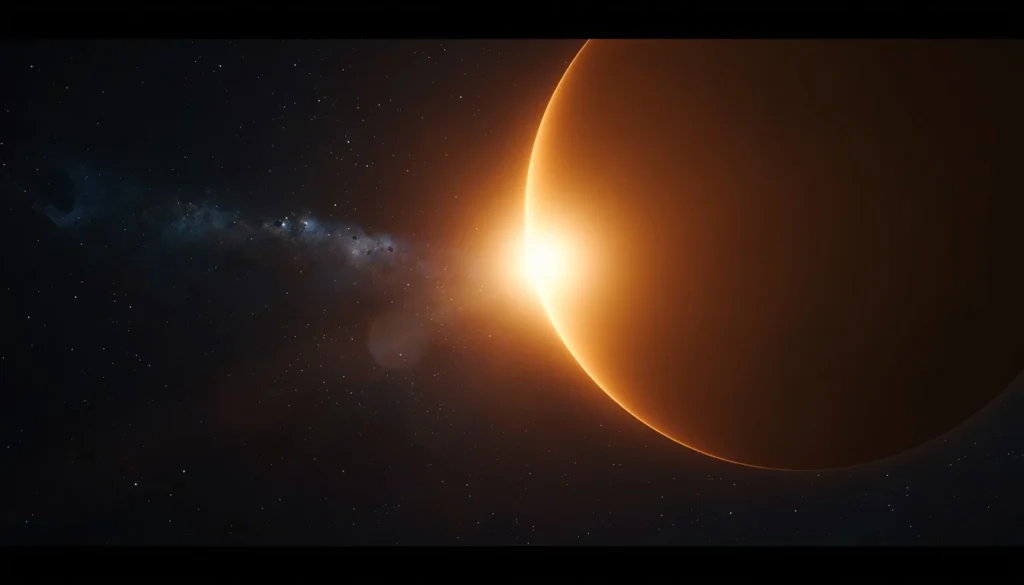
Every planet has its own degree of closeness at which it turns combust. These combustion degrees count on either side of the Sun, and two planets shift their orb when in retrograde motion.
| Planet | Combustion Degree | Retrograde Degree |
|---|---|---|
| Moon (Chandra Asta) | 12° | — |
| Mars (Mangal Asta) | 17° | — |
| Mercury (Budh Asta) | 14° | 12° |
| Jupiter (Guru Asta) | 11° | — |
| Venus (Shukra Asta) | 10° | 8° |
| Saturn (Shani Asta) | 15° | — |
As a rough rule, the closer the planet, the stronger the burn. When the gap drops below 3°20′ — about one Nakshatra pada — the effect becomes very intense.
Combustion in the Birth Chart vs Combustion in Transit
combustion of planets shows up in two ways, and they feel very different in real life. In a birth chart, a combust planet carries a lifelong mark. From my own readings, this is where you see the quiet, repeating struggles — a person with a combust planet keeps facing the same blocked theme in the houses that planet rules, especially if it falls in the 6th, 8th or 12th house, the dushamsthan. If the ascendant lord itself is combust, the difficulty is sharper, and during that planet’s Mahadasha in the Vimshottari Dasha, its results often stay atypical.
The Navamsha chart can soften or confirm the damage. Transit combustion is different — it is temporary and affects everyone together as a mass. For a few weeks the affairs of that planet feel weak for almost all people at once, then the planet moves out of combustion and life returns to normal. This is why a natal combustion feels personal and stays fixed in its nature, whereas a transit one is something everyone goes through together — brief, and easy to predict. Combustion is just one of the many states a planet can be in — explore the full picture in our guide on theAvastha of planets.
Want to see if a planet is combust in your own chart?
Try these free tools to dig deeper into your birth chart:
👉 Free Birth Chart Calculator
👉 Free Synastry Chart Calculator
👉 Free Love Calculator

Combustion of Each Planet and Its Effects
Each combust planet carries the Sun’s self-focused energy into its own area of life. The planet’s themes do not vanish — they get bent toward the self-ego, used for personal aims instead of shared ones. Here is how the 6 classical planets behave when they go combust.
Moon Combustion (Chandra Asta)
When the Moon sits within 12° of the Sun, it turns combust and almost disappears — this is the no-moon day, Amavasya. The Moon rules the mind and emotions, so a combust Moon can leave a person emotionally drained, restless, or too wrapped up in their own feelings. In my experience this placement often shows up as someone who finds it hard to feel settled or to read others’ moods clearly.
Mars Combustion (Mangal Asta)
Mars becomes combust within 17° of the Sun, the widest orb of all. Since Mars and the Sun are natural friends, this is not all bad. The energy turns into raw personal vitality — drive, competition, and bold action. The downside is rash decisions, over-confidence, and physical aggression. This is good time to push your own goals hard, but the heat should be kept away from family.
Mercury Combustion (Budh Asta)
Mercury stays so close to the Sun that it is combust in nearly 25% of all horoscopes. Its orb is 14°, dropping to 12° when retrograde. Mercury rules speech, thinking, trade and teamwork, so a combust Mercury can mean strong but self-centred communication — quick to speak, slow to listen. Teamwork suffers because the person trusts only their own logic. A combust Mercury isn’t the only thing that drains its power — see what happens when Mercury sits debilitated in Pisces.
Jupiter Combustion (Guru Asta)
Jupiter turns combust within 11° of the Sun. As the planet of belief, wisdom and guidance, a combust Jupiter often brings a quiet crisis of faith. The person leans only on their own philosophy and resists advice from teachers or elders. Among all placements, this one feels the most like losing an inner compass.
Venus Combustion (Shukra Asta)
Venus becomes combust within 10° of the Sun, and 8° when retrograde. Venus rules love, relationships and pleasure, so this placement can strain partnerships — both people become more self-focused. Comfort, entertainment and personal enjoyment take the front seat, while give-and-take in relationships becomes harder.
Saturn Combustion (Shani Asta)
Saturn is combust within 15° of the Sun, and this is often the most testing one. The Sun is Saturn’s father in mythology, and the two simply do not get along. The result can be procrastination, an irregular working style, and pressure on luck, money and social reputation.
Combustion, Cazimi, and Under the Sun’s Beams — The Difference
These three are all about a planet’s distance from the Sun, but they are not the same thing — and confusing them leads to wrong readings.
| State | Distance from Sun | Effect on the Planet |
|---|---|---|
| Under the Sun’s Beams | within about 15° | mildly weakened, slightly overshadowed |
| Combustion | within roughly 8° | strongly burnt out, loses potency |
| Cazimi | within 17 minutes (or 1° by the wider rule) | amplified and elevated, in the heart of the Sun |
The surprising one is cazimi. While combustion of planets drowns out a planet, cazimi does the opposite — the planet sits in the heart of the Sun and is protected, even strengthened. It is like having special access to royal favour. Under the Sun’s beams is the gentlest stage, just the early edge of the Sun’s rays. So distance decides everything: a little space brings mild dimming, real closeness brings the full burn, and an exact meeting brings rare power.
Combustion of Benefic vs Malefic Planets
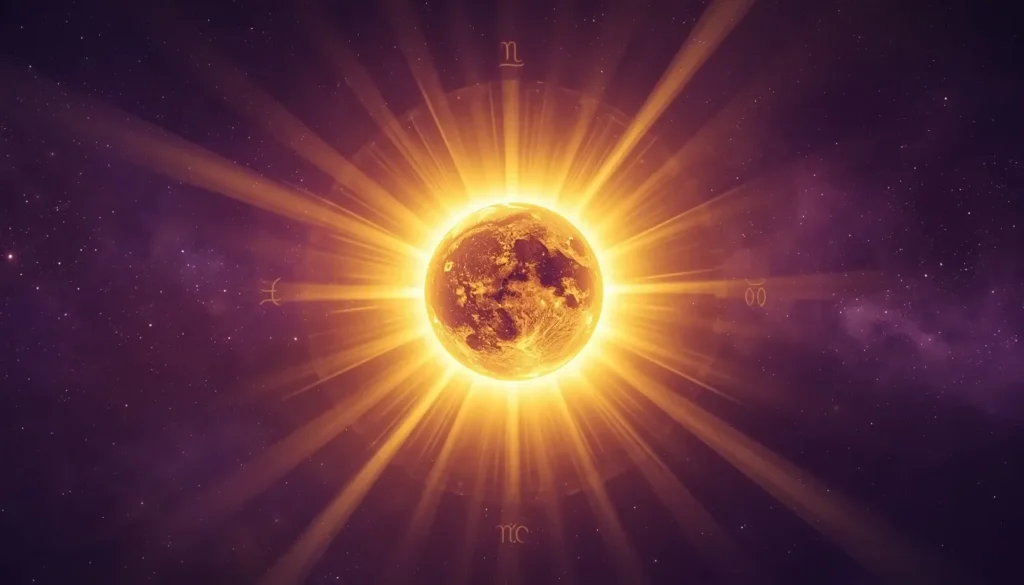
combustion of planets does not treat every planet the same way, and this is where many readers go wrong. The classical text Uttara Kalamrita gives a clear rule: when a benefic planet — like Jupiter, Venus or Mercury — becomes combust, it loses its potency and its good results fade. But when a malefic planet — such as Mars or Saturn — is combust, it does not soften; it can actually grow more troublesome.
So combustion weakens the helpful planets and sharpens the harsh ones. In my own chart work, a combust benefic usually feels like a missed blessing — the support is there on paper but never quite arrives — while a combust malefic feels like extra friction. This is why two charts with the same number of combust planets can read so differently; what matters is which planet got burnt out by the Sun.
How to Identify a Combust Planet in Your Kundali
Spotting a combust planet in your kundali is simple once you know what to check. Look at where the Sun sits, then find any other planet in the same sign close to it. Measure the gap in degrees and compare it with that planet’s combustion degree — for example, Mars within 17°, Mercury within 14°, or Venus within 10°. If the planet falls inside that range, it is combust or Asta. Most software marks it with a small “c” next to the planet.
A few things make the reading sharper: check if the combust planet is retrograde, since Mercury and Venus shift their orb then; note which houses that planet rules, as those areas feel the planetary weakness; and see if the ascendant lord itself is combust, which makes the effect stronger across the whole chart.
Remedies for Combust Planets
A combust planet cannot be “uncombusted,” but its scorched energy can be eased. Remedies work by gently strengthening the weakened planet so it can express itself better.
- Mantra: Chant the mantra of the combust planet regularly to rebuild its strength.
- Donation: Offer items linked to that planet — for example, white items for the Moon or green for Mercury.
- Gemstone: Wear the planet’s gemstone only after proper advice, never on guesswork.
- Surya remedies: Since the Sun causes the burn, offering water to the Sun at sunrise helps balance the pair.
- Use its strong side: A combust planet still works well in solo tasks, so build life around the areas where it shines.
In my experience, the mantra approach gives the steadiest results, especially when the combust planet rules an important house.
Explore your chart further with these free calculators:
👉 Free Big Three Calculator
👉 Free Chiron Sign Calculator
Frequently Asked Questions (FAQ)
What does it mean when a planet is combust?
It means a planet has come too close to the Sun and turned invisible in its light. Called Graha Asta in Vedic astrology, the planet loses its strength and cannot deliver results on its own — its energy gets absorbed by the Sun.
Is a combust planet good or bad?
Mostly weakening, but not fully bad. A benefic planet loses its potency when combust, while a malefic can grow harsher. The exact result depends on which planet, which houses it rules, and whether it sits in a difficult dushamsthan.
How many degrees make a planet combust?
Each planet has its own orb: Moon 12°, Mars 17°, Mercury 14° (12° retrograde), Jupiter 11°, Venus 10° (8° retrograde), and Saturn 15°. These distances count on either side of the Sun.
What are the effects of a combust planet in the birth chart?
In a birth chart, a combust planet leaves a lifelong mark. The houses it rules face repeated struggles, its Mahadasha gives atypical results, and the planet’s themes bend toward the self-ego instead of working freely.
How long does planet combustion last?
In a birth chart it lasts a lifetime. In transit it is short — the Moon clears in days, while Venus, Jupiter and Saturn stay combust for a few weeks before they move out of combustion.
What are the remedies for a combust planet?
Common remedies include chanting the planet’s mantra, donation of related items, wearing its gemstone after advice, and offering water to the Sun. Using the combust planet’s strong solo qualities also helps balance its planetary weakness.